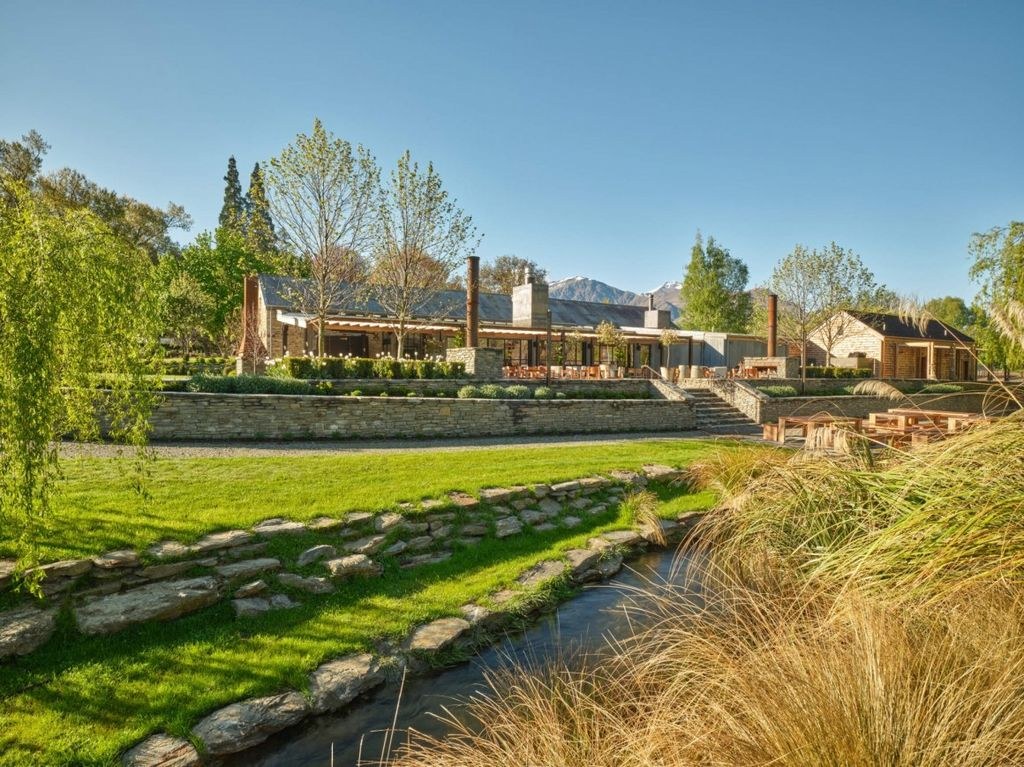
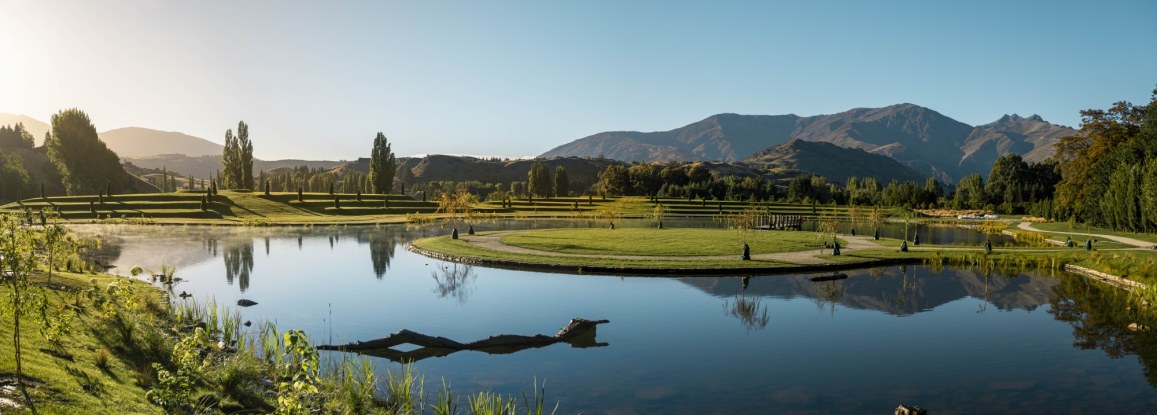
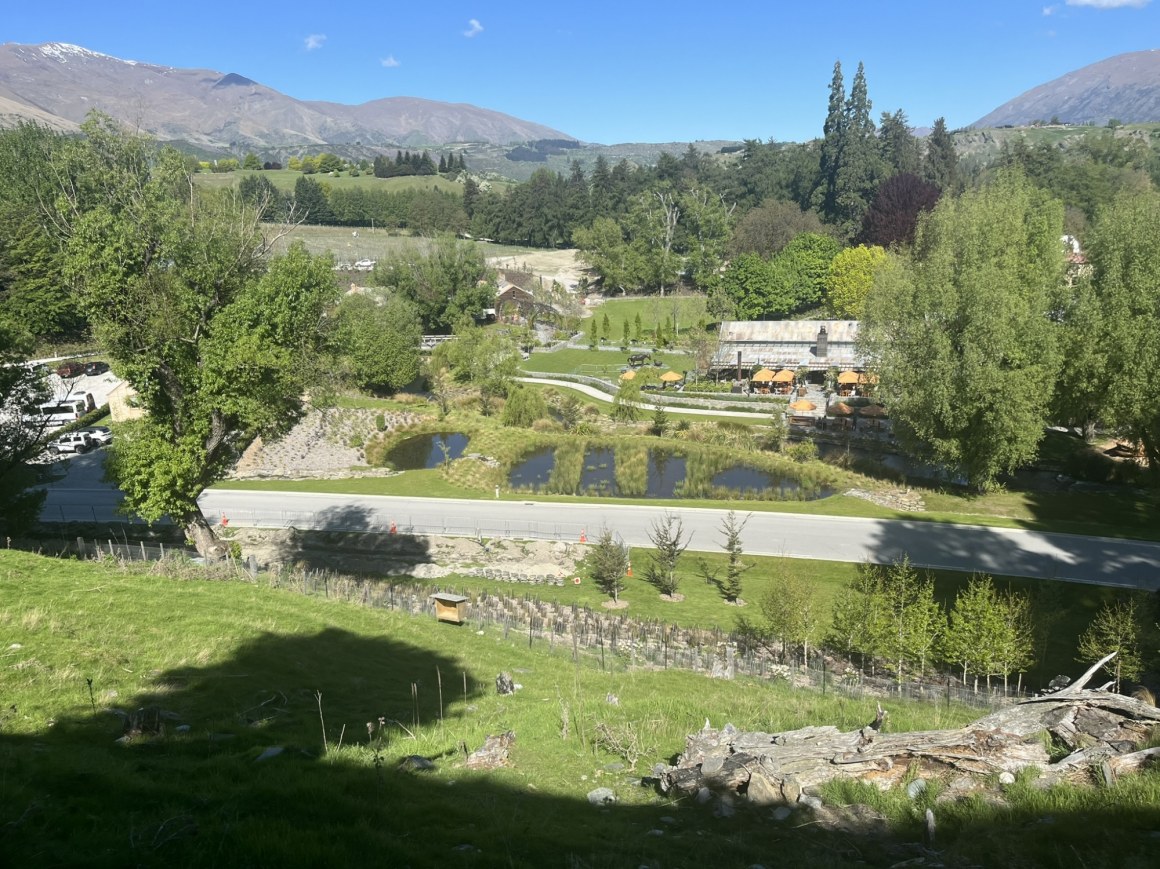
Set near Arrowtown, Ayrburn is a major hospitality development that has transformed a historic farm into a destination featuring restaurants and bars, gardens, cycle trails and a vineyard.
CKL was engaged by developer Winton in 2020 to provide environmental engineering expertise, including stormwater management, flood modelling, and erosion and sediment control.
With Mill Creek flowing through the property and Lake Hayes (Wai Whakaata) downstream, protecting and improving water quality was central to the development. CKL helped deliver a nature-based stormwater solution designed not simply to meet compliance requirements, but to leave the receiving environment in a better condition.
The challenge
Ayrburn sits within a sensitive catchment where development needed to be carefully managed to protect the ecological, recreational and cultural values of Mill Creek and Lake Hayes.
The challenge extended beyond managing stormwater generated by the development itself. Historic sediment and contaminant loads from the wider catchment also flow through the site, creating an opportunity for the project to contribute to broader water-quality improvements.
Any solution also needed to complement Ayrburn’s landscape-led design, integrating stormwater infrastructure into a high-quality hospitality environment without compromising its character.
CKL’s approach
CKL developed a catchment-focused stormwater strategy based around a multi-layered ‘treatment train’.
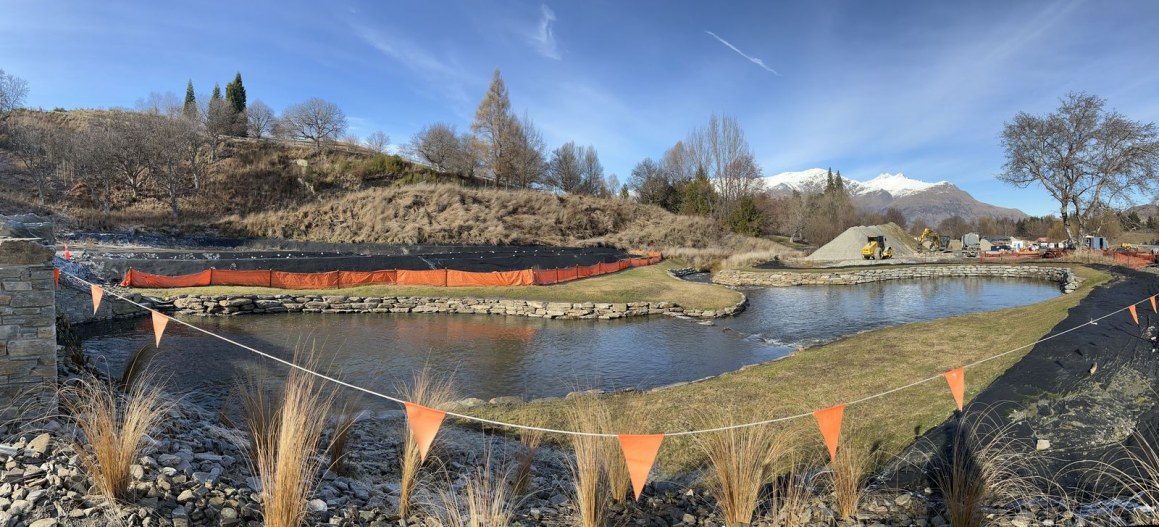
Raingardens, wetlands, swales, sediment retention ponds and infiltration systems progressively capture, slow and treat stormwater before it reaches Mill Creek. These nature-based solutions were integrated into the landscape, allowing the stormwater system to perform an important engineering function while contributing to the character of the precinct.
Rather than focusing solely on compliance, the strategy sought to improve the quality of water passing through the site and contribute to wider efforts to restore Lake Hayes.
Collaboration was critical. CKL worked alongside Winton, Fluent, Friends of Lake Hayes, Ngāi Tahu, Fish & Game, ecologists and regulatory bodies to ensure environmental, cultural and community considerations were incorporated from master planning through to delivery.
The outcome
The Ayrburn stormwater strategy has delivered measurable reductions in sediment, heavy metals and nutrient loads, alongside long-term improvements in turbidity monitored through NIWA telemetry.
Native riparian planting and habitat restoration have further enhanced the ecological value of the site, while the integrated design demonstrates how stormwater infrastructure can become part of the landscape rather than detract from it.
The project was recognised as ‘Best in Class for Property and Buildings – Projects under $10 million’ at the 2026 Arthur Mead Awards, where judges highlighted its multi-layered, nature-based solution, measurable water-quality improvements and collaborative approach.
Ayrburn demonstrates how environmental engineering can go beyond mitigating the effects of development to actively contribute to the restoration and long-term resilience of a wider catchment.