When people think about land development, they often picture roads, buildings, parks and infrastructure.
But according to CKL's environmental team, one of the most important conversations happens long before any of those decisions are made.
It starts with water.
For Director and Environmental Engineer Bronwyn Rhynd, understanding how water naturally moves through a landscape should be one of the first considerations in any development project.
"At CKL, we're passionate about designing stormwater management strategies that honour the mana of the water," says Bronwyn.
"Water has followed its own path through the landscape long before any development existed. Honouring the mana of the water means recognising that water has value beyond its engineering function. It shapes landscapes, supports ecosystems, influences community wellbeing and connects people to place.
"When we understand those natural systems and work with them rather than against them, we can create outcomes that are better for communities, developers and the environment."
For Bronwyn, the conversation is about much more than stormwater infrastructure.
"For a long time, environmental outcomes were often viewed as constraints on development. What we're increasingly seeing is that they can actually be drivers of better development.
"When we understand the environmental context of a site and work with it, we often end up with projects that are more resilient, more attractive and more connected to the communities around them."
LWhat does it mean to put water first?
According to Principal Environmental Engineer Zeb Worth, putting water first doesn't mean prioritising water above every other consideration.
It means understanding it early enough that it can help inform better decisions.
"Every site has its own opportunities and constraints," says Zeb.
"Water is one of the most important pieces of information a site can give us. If we understand how it moves through a landscape, where the risks are and where the opportunities are, we can make much better decisions about how that site is developed."
The best outcomes are achieved, according to Zeb, when planners, engineers, urban designers and environmental specialists work together from the outset.
"Every discipline has its own priorities and constraints. The key is understanding those early and designing around them collectively rather than everyone working in silos and trying to stitch it all together at the end."
That early understanding can help identify flood risks, reduce the need for costly redesigns and create opportunities to integrate stormwater solutions into the wider development.
Balancing environmental and commercial outcomes
Of course, putting water first isn't always the easiest conversation.
Developers are balancing commercial realities, project timelines, infrastructure costs and community expectations. Environmental outcomes can sometimes be viewed as competing with those priorities.
"There are definitely projects where the focus is on maximising yield and then working out the stormwater later," says Zeb.
"My role is to help people understand that if you factor water into the project from the beginning, you often have more options available to you."
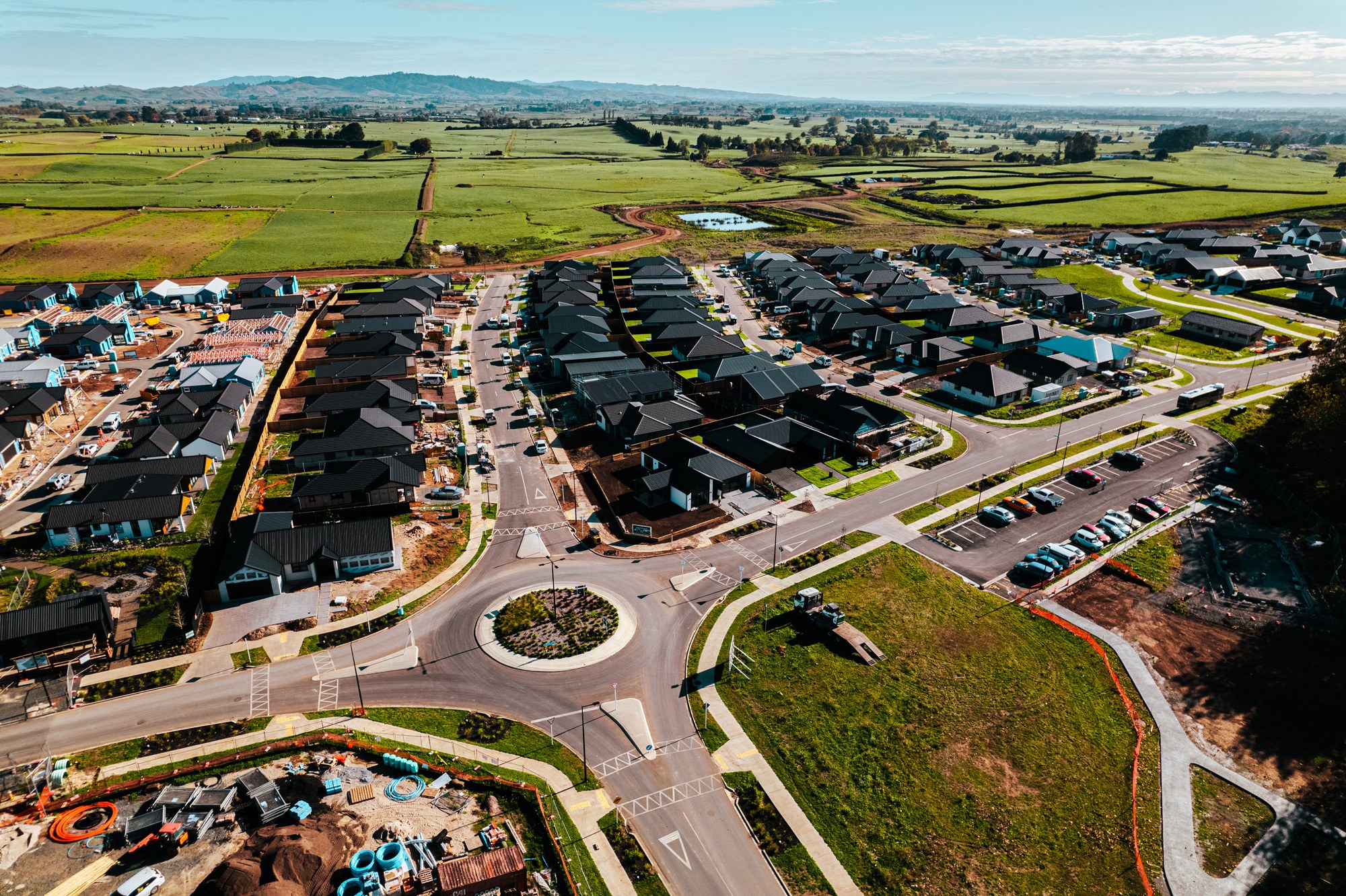
Rather than relying solely on pipes and engineered solutions, early planning can create opportunities to incorporate wetlands, swales, raingardens and open spaces into the design.
"If you've got the space and you think about it early enough, you can often use natural systems and open channels instead of more expensive infrastructure. Not only can that reduce costs, but it can also create better places for people."
Beyond compliance
Bronwyn believes one of the biggest shifts occurring within the industry is a move away from simply meeting minimum requirements.
"Success shouldn't be measured solely by whether a project complies with the rules," she says. "We should be asking whether a project leaves the environment in a better state than we found it.
"Some of the most exciting projects we're seeing now are moving beyond mitigation and looking at how development can actively contribute to environmental outcomes. That's where the real opportunity lies."
Ayrburn: putting the philosophy into practice
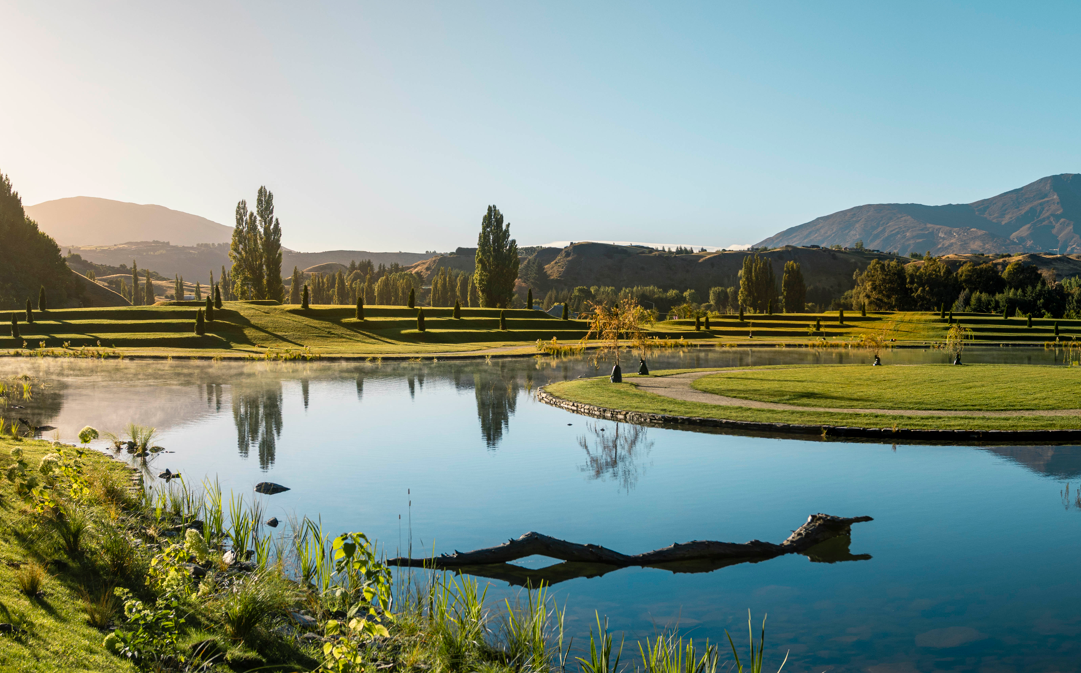
One project that demonstrates this philosophy in action is the Ayrburn Hospitality Precinct in Arrowtown.
Located within the Lake Hayes (Wai Whakaata) catchment, the project was guided by a simple principle: if the health of Lake Hayes was to improve, the health of the catchment needed to improve as well.
Rather than treating stormwater as a compliance exercise, water quality became one of the drivers of the design.
Working alongside Winton, Fluent, Friends of Lake Hayes, Ngāi Tahu, ecologists, regulators, landscape architects and the wider project team, CKL helped develop a multi-layered, nature-based stormwater strategy designed to improve water quality outcomes before water reaches Mill Creek and Lake Hayes.
The system incorporates wetlands, ponds, swales and raingardens that work together to mimic natural processes, improving water quality while becoming part of the landscape itself.
For Bronwyn, the project demonstrates what is possible when environmental outcomes become part of the vision from the outset.
"The goal was never simply to manage stormwater," she says. "The goal was to improve water quality outcomes for Lake Hayes while helping create a destination people wanted to spend time in.
"That's what happens when environmental, community and commercial outcomes are considered together rather than separately."
Earlier this year, the project was recognised at the Arthur Mead Awards, receiving Best in Class for Property and Buildings (Projects under $10 million).
The judges praised the project's integrated approach to engineering, ecology, landscape and collaboration, along with its measurable contribution to catchment-scale environmental improvement.
"The award is a great acknowledgement of the work that went into Ayrburn and the collaboration that made it possible," Bronwyn says. "And importantly, it demonstrates that environmental outcomes and development outcomes don't have to compete with each other.
"The best projects recognise that environmental, community and commercial outcomes are all connected. When we stop treating water as a constraint and start treating it as an asset, we create opportunities to achieve all three."