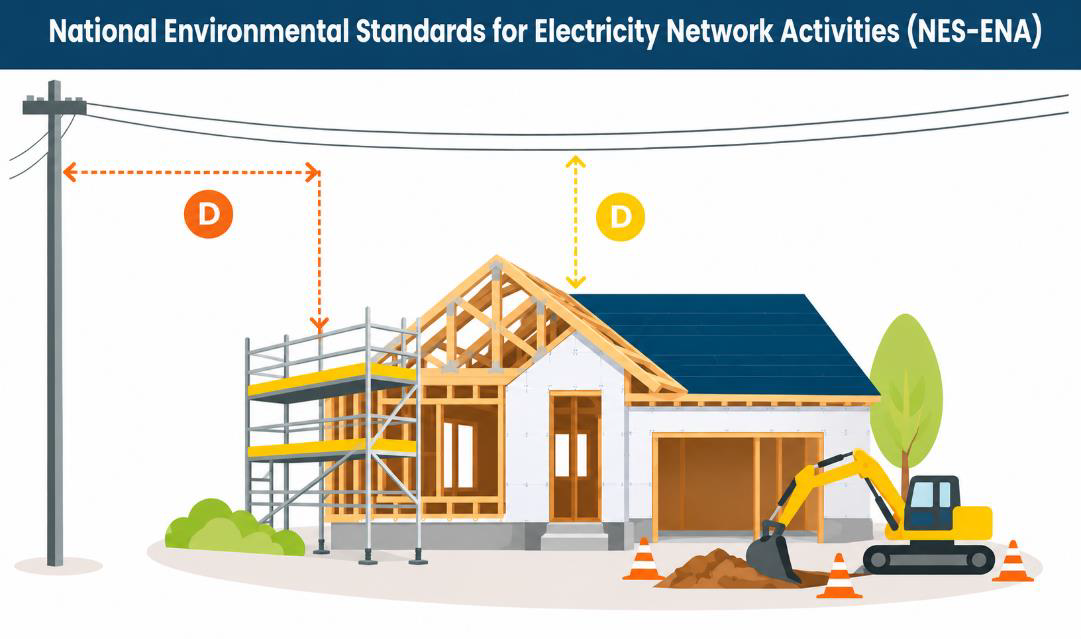
New regulations governing electricity networks have introduced additional considerations for land development, making it more important than ever to identify potential constraints from overhead powerlines early in a project.
The National Environmental Standards for Electricity Network Activities (NES-ENA), which came into force on 8 October 2026, replace the previous standards for electricity transmission activities. (Source).
Designed to make it easier and faster for electricity network operators to maintain, upgrade and develop their infrastructure, the new standards aim to reduce unnecessary consenting costs and delays.
However, while the changes are intended to streamline electricity network activities, they also introduce additional requirements for landowners and developers, potentially adding time, cost and complexity to subdivision and development projects.
What has changed for land developers?
The new regulations introduce several important considerations for subdivision and development projects, particularly where overhead electricity lines are present.
• Proximity to powerlines: Where overhead electricity distribution lines are within 30 metres of proposed buildings or structures, additional checks may be required to demonstrate compliance with electrical safe-distance requirements (NZECP 34:2001).
• Subdivision and earthworks: New consenting requirements may apply to subdivision and earthworks on sites containing overhead electricity lines.
• Construction activities: Machinery, scaffolding and other construction activities must comply with relevant electrical safety distances.
• Additional assessments: Developers may need to confirm powerline details with the relevant electricity network operator and undertake further technical assessments to demonstrate compliance.
For developers, these requirements make it increasingly important to identify potential electricity infrastructure constraints early, before they affect project design, consenting or construction.
Why early surveying matters
Identifying potential electricity network constraints at the beginning of a development project can help avoid costly surprises further down the track.
Assessing compliance may involve confirming line voltages and span details with the relevant electricity network operator, such as Vector or Powerco, before undertaking geometric assessments against the requirements of NZECP 34:2001.
Where compliance cannot be demonstrated through an initial assessment, further investigation by a suitably qualified and experienced person may be necessary.
This can introduce additional costs and delays, particularly if potential issues are only identified once a development has progressed through design or consenting.
Incorporating electricity infrastructure considerations into initial topographical surveys can help developers understand potential constraints earlier, allowing them to make more informed decisions about site layouts, building locations and project feasibility.
CKL contributing to the development of national surveying standards
As the industry responds to the new requirements, work is underway to develop a consistent national approach to surveying and positional certification of electricity assets.
CKL's Principal Surveyor, Malcolm Dawson is part of a Survey & Spatial NZ working group developing a proposed national surveying standard for electricity assets, including overhead lines and poles.
The initiative, being driven by electricity network operator Vector in Auckland, aims to establish a consistent methodology for surveying electricity infrastructure and assessing compliance with NZECP 34:2001.
Through its involvement, CKL is contributing its surveying expertise to the development of an approach that could eventually be adopted across New Zealand.
For Malcolm, the priority is ensuring potential compliance issues are identified as early as possible in the development process.
"Developers need to know about potential issues with overhead powerlines before they get too far into the design process. By incorporating these checks into the initial topographical survey, we can identify possible constraints early and give clients the opportunity to address them before they become more complicated and costly."
Planning a development? Look up early
The introduction of the NES-ENA reinforces the importance of understanding all the constraints affecting a site before committing to a development.
Overhead electricity infrastructure may not always be an obvious concern when assessing a property's development potential, but identifying it early can make a significant difference to project planning, design and consenting.
Planning a subdivision or development near overhead powerlines, or already responding to a Council request for information?
Whether you're assessing a site's development potential or need to confirm electrical safety separation distances as part of the consenting process, CKL's experienced surveyors understand the requirements and can help you navigate them.
Get in touch with our team to discuss how we can help keep your project moving.