
After more than a decade of involvement in New Zealand’s largest-ever transport infrastructure project, CKL has celebrated the opening of Auckland’s City Rail Link – although its work beneath the city isn't finished yet.
Passenger services began on Sunday 13 September, marking the culmination of years of planning and construction on the $5.5 billion project.
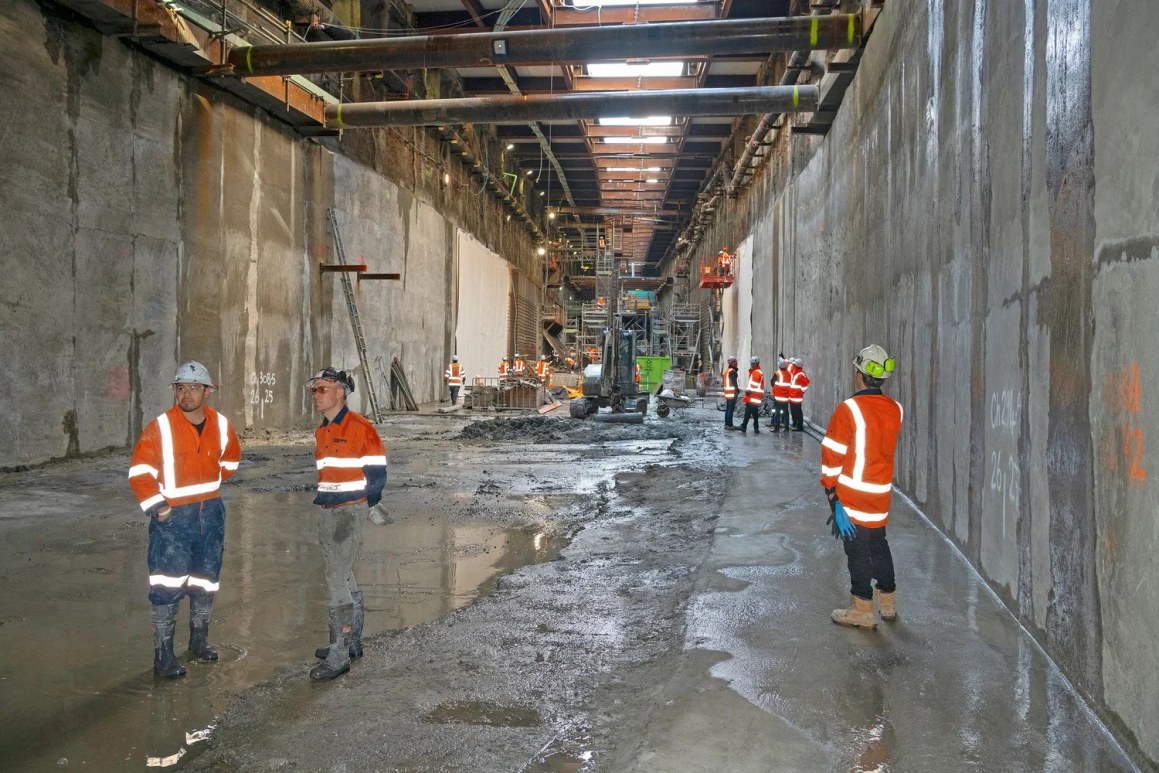
The City Rail Link includes 3.45km of twin rail tunnels beneath central Auckland, two new underground stations at Te Waihorotiu and Karanga-a-Hape, and the redevelopment of Maungawhau and Waitematā stations.
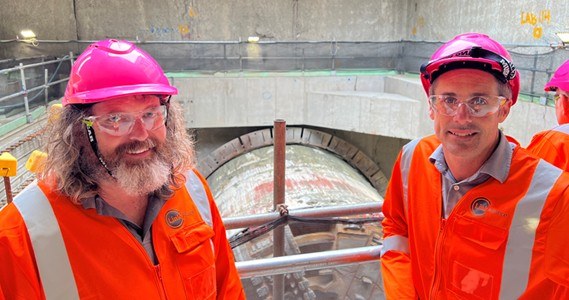
For CKL Survey Manager Simon Reid, the opening represents a major milestone in a project he has personally worked on for more than 10 years.
CKL became involved in City Rail Link following its work on Auckland's Waterview Connection, where the team had developed valuable experience in the specialist land legalisation work required when major infrastructure passes beneath existing properties.
That expertise has played an important, if largely unseen, role in City Rail Link.
“The majority of our work has been to create the new parcels for the tunnel as they pass under private property,” Simon says.
In practice, that means defining the space required for the railway in three dimensions. CKL’s survey plans use plan views, cross-sections and levels to establish boundaries both horizontally and vertically – effectively creating legal “boxes” around the underground infrastructure and representing them within the two-dimensional Landonline system.
To date, CKL has lodged and gained approval for 30 survey plans across the 14 property project zones, alongside specialist work involving unit title developments where the tunnels pass beneath common property.
As the project has progressed, CKL's work has expanded to include land beneath public roads and around the new station precincts, where road, rail and other property interests need to be clearly defined and separated.
While the physical railway is now operating, CKL is continuing to prepare and progress survey plans through Land Information New Zealand (LINZ), helping establish the legal framework that will sit around the infrastructure for decades to come.
The CRL property team defined 14 property project zones for CKL to work across, each involving different combinations of land ownership, boundaries and vertical levels.
Three road-interface plans have been approved by LINZ to date, including work beneath Spaghetti Junction, Pitt Street and Vincent Street. The Vincent Street plan was particularly complex, bringing together road and private property interests with three-dimensional requirements that had to be clearly defined both horizontally and vertically.
Simon says one of the challenges has been finding ways to represent that complexity on survey plans that can be readily understood not only by surveyors, but by the many other stakeholders involved.
“There would only be a handful of surveyors across the country who would have done something like this, if that,” he says.
Consistency has also been critical. Simon has remained involved throughout CKL's time on the project, providing continuity and institutional knowledge as the project itself – and the people and organisations involved – have changed around it.
“The biggest thing is the consistency that we've had of people on both sides,” he says.
That long involvement has also enabled CKL to work closely with LINZ to establish a consistent approach to checking and approving some of the project's more unusual survey plans.
Today, the focus is increasingly on the areas surrounding the completed stations, including Maungawhau, as the final land and ownership arrangements are worked through.
Simon expects CKL’s work on the project to continue for another 12 to 18 months as final land and ownership arrangements are agreed and the remaining survey plans progress through approval and lodgement.
So while Aucklanders can now board a train and travel through the tunnels beneath the city, there is still work happening behind the scenes to define exactly where that infrastructure sits, and who owns what around it.
For CKL, it's the final chapter in a project that has been more than a decade in the making.